
How to Choose an Industrial Door Guide
Start with the Opening's Main Job
Choose an industrial door by defining what it must do before comparing product names. Is the priority weather closure, rapid internal traffic, temperature separation, a very wide opening or an approved fire barrier? List essential requirements first, then useful options. A door that misses an essential requirement should leave the shortlist even if its price is attractive.
Eliminate Installation Conflicts Early
Provide clear width and height, headroom, both side spaces and mounting details. Photograph the ceiling and surrounding equipment. Request drawings for the proposed size: an overhead sectional door needs a track path, a rolling door needs space for its roll and guides, and a folding door needs room for its moving panels. Check service access as well as operating clearance.
Make a Shortlist by Application
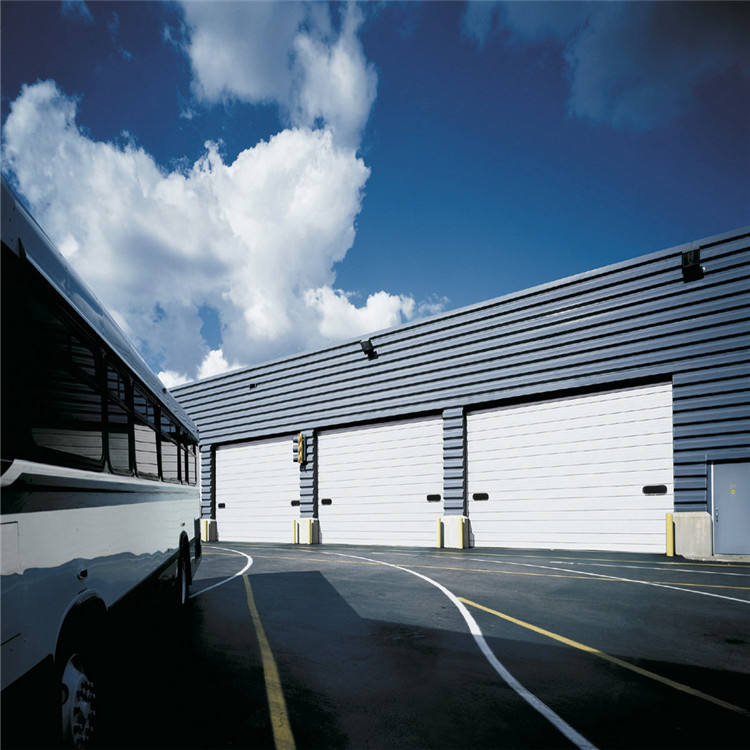
- External loading entrance: compare sectional and rolling doors for installation fit, sealing and documented wind performance.
- Frequent internal traffic: compare PVC high-speed and rigid high-speed designs using actual duty and environmental requirements.
- Cold room or freezer: compare dedicated insulated doors, seals, operating temperature and any required anti-icing measures.
- Wide equipment opening: assess folding arrangements and panel travel; confirm structural support and project-specific limits.
Turn Traffic Counts into Operating Duty
In a hypothetical passage, 20 separate open-close cycles per hour over 8 operating hours gives 160 cycles per day. Supply the peak-hour demand too; an average can hide dispatch queues. Ask for duty capability at the ordered size, opening and closing behaviour, hold-open logic and maintenance intervals. Maximum speed alone does not establish suitability.
Verify Special Performance Before Ordering
State temperature, corrosion exposure, wind conditions and any required fire rating. Request evidence applicable to the offered assembly and installation, including the actual size and options where relevant. A material label such as insulated, stainless or flame-retardant does not by itself confirm a complete door's performance or regulatory acceptance.
Compare Controls and Service, Not Just the Door Leaf
- Specify activation from both sides, required protective functions, power-failure operation and controller interfaces.
- Confirm who supplies mounting steelwork, cabling, installation, commissioning and operator training.
- Ask for spare-parts lead times, maintenance tasks, warranty exclusions and a documented acceptance plan.
Send One Consistent Request to Every Supplier
Attach the opening drawing, site photographs, traffic profile, environment, power supply and required delivery location. Ask suppliers to mark every exception and missing input. Approve the installation drawing and scope before production, then use the same requirements for handover. This makes differences visible instead of hiding them behind product names.
Industrial Sectional DoorVIEW PRODUCTS