
Anjie Door Solution
Fire & Safety Door Solutions
Anjie Door provides fire and safety door solutions for factories, warehouses, logistics centers, commercial buildings, workshops, and industrial facilities. Solutions can include fire-rated door systems as well as safety technologies for high-speed doors, sectional doors, roller shutters, and other automated industrial entrances.
Key Challenges
Industrial buildings require door systems that support both everyday operations and building safety, including fire compartmentation, escape routes, equipment rooms, warehouses, production areas, and automated vehicle entrances.
Fire Safety
Fire-rated doors help maintain designated fire compartments and protect openings in fire-resistant walls according to the building design.
Operational Safety
Automated industrial doors must detect or reduce risks involving personnel, forklifts, vehicles, door movement, falling components, and unexpected closing.
Mixed Industrial Traffic
Warehouses and production facilities may combine trucks, forklifts, pallet movement, personnel, automatic doors, and loading equipment.
Project Compliance
Door type and fire rating must correspond with project specifications and local regulatory requirements.
Our Solution Strategy
Separate Fire and Operational Risks
A complete industrial door safety strategy should consider fire-rated compartmentation and everyday automated-door operation separately.
Specify Certified Fire Doors
Fire-rated performance must never be assumed from appearance or material alone; the specified door must match the required tested or certified configuration.
Add Safety Devices to Automated Doors
Photocells, safety edges, light curtains, warning lights, emergency stops, and manual emergency operation can reduce operational risk.
Plan Door Safety With Traffic Flow
Door safety should be part of the traffic system, such as radar activation, photocell protection, warning lights, and automatic closing.
Recommended Door Systems
Fire Rated Steel Doors
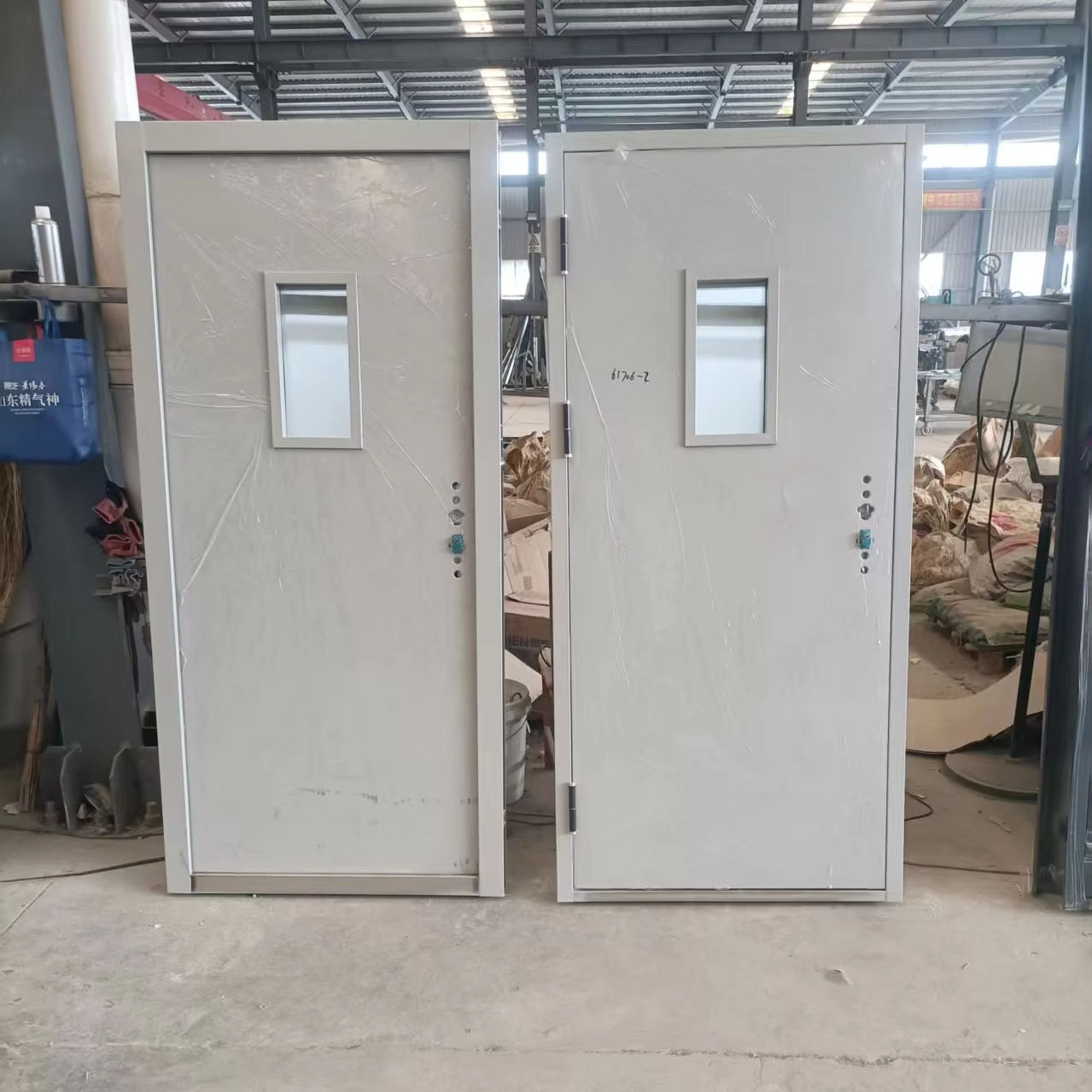
Steel fire-rated personnel doors can be used in industrial and commercial buildings for equipment rooms, utility spaces, stairwell access, emergency exits, and fire-separated corridors.
- Single or double leaves
- Project-specific hardware
- Escape route requirements
Fire Rated Rolling Doors
Certain large industrial openings may require a fire-rated rolling closure where a conventional personnel door is unsuitable.
- Vertical closure
- Compact surrounding floor space
- Activation selected by fire-protection design
Industrial Sectional Door Safety
Industrial sectional doors may require cable protection, spring protection, anti-fall mechanisms, photocells, safety edges, and emergency manual operation.
High Speed Door Safety
High-speed doors operate rapidly, so sensing and control systems are particularly important.
- Photocells
- Light curtains
- Safety edges
- Radar detection
- Emergency stop
- Warning lights
Typical Applications
Fire Compartment Walls
Fire-rated doors protect designated openings according to project fire protection design.
Equipment and Electrical Rooms
Fire-rated personnel doors can support protected access to technical rooms and utility spaces.
Warehouses and Logistics Routes
Door safety should consider trucks, forklifts, pallet movement, personnel, automatic doors, and loading equipment.
Manufacturing Plants
Facilities may combine fire-rated doors between zones, high-speed doors with sensors, sectional doors with safety devices, and emergency exit doors.
Emergency Escape Routes
Door hardware and configuration should match escape route requirements and applicable project standards.
How to Choose
Fire Door Selection
Confirm required fire rating, opening dimensions, wall construction, door location, single or double door, required hardware, escape route requirements, and local codes or certifications.
Automatic Door Safety
Review personnel and vehicle movement, door speed, closing behavior, sensing zones, and emergency operation requirements.
Warehouse Safety Example
A busy warehouse entrance might combine radar activation, photocell protection, warning light, and automatic closing.
Never Assume Fire Performance
Fire-rated performance must correspond with the required tested or certified configuration for the project.
Why Anjie Door
Anjie Door provides industrial door systems for multiple functional areas within a building.
Multiple Door Systems
Project solutions can include fire rated doors, industrial sectional doors, high speed doors, rigid spiral doors, and roller shutter doors.
Safety and Controls
Safety sensors, automatic control systems, emergency operating systems, and warning devices can be configured by project.
Project Drawing Support
Specifications can be configured according to project drawings, operating conditions, standards, and opening requirements.
Related Applications
Related Solutions
FAQ
What is the difference between fire safety and operational safety?
Fire safety focuses on fire-rated compartmentation and protected openings, while operational safety focuses on risks around moving doors, personnel, forklifts, vehicles, and automated controls.
Can fire-rated performance be assumed from steel construction?
No. Fire-rated performance must correspond with the required tested or certified configuration for the project, not only the material appearance.
What safety devices can be used on automatic industrial doors?
Photocells, safety edges, light curtains, radar detection, warning lights, emergency stop, and manual emergency operation can be selected depending on door type and application.
What information is needed for a fire and safety door solution?
Door location, opening dimensions, building application, required fire rating, traffic conditions, operating method, safety devices, project location, and applicable standards are useful.
Request a Fire & Safety Door Solution
To evaluate a project, provide door location, opening dimensions, building application, required fire rating where applicable, traffic conditions, operating method, required safety devices, project location, and applicable standards or project specifications.
- Door location
- Opening dimensions
- Building application
- Required fire rating where applicable
- Traffic conditions
- Door operating method
- Required safety devices
- Project location
- Applicable standards or project specifications